
IRS Appeals – Not On Your Own

The IRS has an appeals process. Here’s how it works. You can use the appeals process if:

  • You received a letter from the IRS explaining your right to appeal the IRS’s decision
  • You do not agree with the IRS’s decision
  • You are not signing an agreement form sent to you

If those conditions are met then you can ask for the appeal conference or hearing.

In your appeal you must believe and then be able to do the following:

  • IRS made an incorrect decision based on a misinterpretation of the law, check the publications discussing your issue(s)
  • IRS didn’t properly apply the law due to a misunderstanding of the facts, be prepared to clarify and support your position
  • IRS is taking inappropriate collection action against you or your offer in compromise was denied and you disagree with that decision, be prepared to clarify and support your position
  • Facts used by the IRS are incorrect, then you should have organized records or other evidence to support your position

In addition to the ordinary appeal process, the IRS offers a mediation process that can resolve disputed issues more quickly.

The appeals process isn’t for you if:

  • The correspondence you received from the IRS was a bill and there was no mention of an appeal
  • You didn’t provide all information to support your position to the examiner during the audit
  • Your only concern is that you can’t afford to pay the amount you owe

If you don’t meet the conditions above for having your case enter the Appeals process, contact the IRS employee you have been working with and see what help you can get.

Sound complicated? It is. Which is why making a phone call to Legal Tax Defense should be your first step when you have a tax problem. Call 800-231-3321 to speak to a tax attorney for free.

Sometimes you can handle your IRS issues on your own and if that’s the case Legal Tax Defense will give you the free information for your need. But if you need more help with your tax issue, Legal Tax Defense has enrolled agents, CPAs, and tax attorneys that can help you immediately.

Should you do it on your own? Well, before you answer let me remind you of something my father who was an attorney told me:

A lawyer who represents himself has a fool for a client.

Disclaimer: Alan Mendelson is a well-known TV consumer news reporter who reports on tax issues. You should seek professional advice if you have tax questions or issues. 
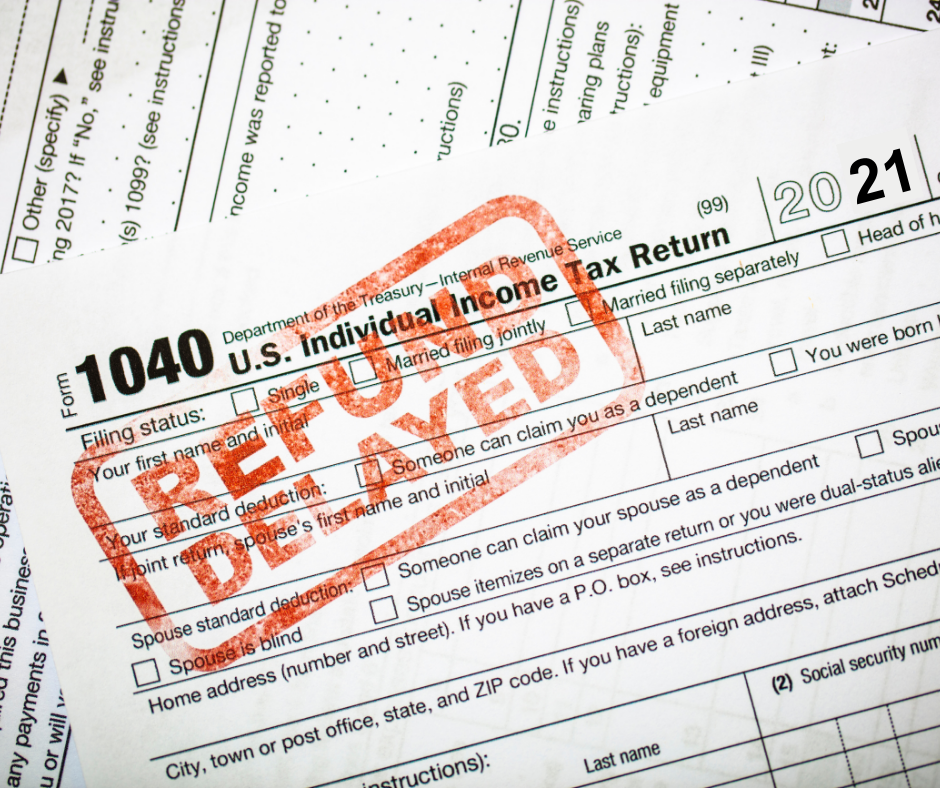
Errors That Delay Tax Refunds

The IRS is understaffed and overworked which is why the IRS is pushing these reminders to speed the processing of tax returns. They’ll also speed up your refund.

File electronically. Taxpayers can use their computer, smartphone, or tablet to file their taxes electronically. Tax software guides people through each section of their tax return using a question-and-answer format. Enter information carefully. This includes any information needed to calculate credits and deductions. Using tax software should help prevent math errors, but taxpayers should always review their tax returns for accuracy.

Use the correct filing status. Tax software, including IRS Free File, also helps prevent mistakes when selecting a tax return filing status.

Answer the virtual currency question. The 2021 Form 1040 and 1040-SR ask whether at any time during 2021, a person received, sold, exchanged, or otherwise disposed of any financial interest in any virtual currency. Taxpayers should not leave this field blank but should check either “Yes” or “No.” See our Blog on this subject.

Report all taxable income. Underreporting income may lead to penalties, interest, delays, and possibly an audit. See our Blog on this.

Include unemployment compensation. The IRS says it is seeing situations where people are not including unemployment compensation they received in 2021 on their tax returns. Although a special law allowed taxpayers to exclude unemployment compensation from taxes in 2020, it was only for that year. Unemployment compensation received in 2021 is generally taxable, so taxpayers should include it as income on their tax returns.

Double-check name, birth date, and Social Security number entries. Taxpayers must correctly list the name, Social Security number (SSN), and date of birth for each person they claim as a dependent on their individual income tax return. Enter each SSN and individual’s name on a tax return exactly as printed on the Social Security card. This is a common error.

Double-check routing and account numbers. Requesting a direct deposit of a federal refund into one, two, or even three accounts is convenient and allows the taxpayer access to their money faster. Make sure the financial institution routing and account numbers entered on the return are accurate. Incorrect numbers can cause a refund to be delayed or deposited into the wrong account.

Mail paper returns to the right address. Paper filers should confirm the correct address but taxpayers and tax professionals are encouraged to file electronically if possible.

Sign and date the return. If filing a joint return, both spouses must sign and date the return. E-filers can sign using a self-selected personal identification number (PIN).

Keep a copy. When ready to file, taxpayers should make a copy of their signed return and all schedules for their records.

Request an extension, if needed. Taxpayers who cannot meet the April 18 deadline can easily request a six-month filing extension to October 17 and prevent late filing penalties Use Free File or Form 4868. But keep in mind that, while an extension grants additional time to file, tax payments are still due April 18 for most taxpayers. See our Blog on this.

Remember that Legal Tax Defense offers a free consultation if you have tax issues. Call now to speak to a tax attorney for FREE!

Disclaimer: Alan Mendelson is a well-known TV consumer news reporter who reports on tax issues. You should seek professional advice if you have tax questions or issues. 

The First Sign Of Identity Theft

This is the time of year when many consumers find out that they’re a victim of identity theft. And they find out that they’re a victim from the IRS.

Unfortunately, many ID crooks use a stolen identity to file for IRS tax refunds. But fortunately, the IRS does have “checks” that can stop these identity theft attempts.

Here’s how the IRS could alert you that someone is trying to steal your identity:

  • You get a letter from the IRS inquiring about a suspicious tax return that you did not file.
  • You can’t e-file your tax return because of a duplicate Social Security number.
  • You get a tax transcript in the mail that you did not request.
  • You get an IRS notice that an online account has been created in your name.
  • You get an IRS notice that your existing online account has been accessed or disabled when you took no action.
  • You get an IRS notice that you owe additional tax or refund offset, or that you have had collection actions taken against you for a year you did not file a tax return.
  • IRS records indicate you received wages or other income from an employer you didn’t work for.
  • You’ve been assigned an Employer Identification Number but you did not request an EIN.

If you receive any of these letters or notices respond to them immediately. Also, alert the major credit reporting agencies as they provide free services to stop unauthorized applications for credit in your name.

In addition to notices from the IRS that might indicate identity theft, look for letters from your state unemployment insurance department about benefits you didn’t apply for or applications in your name that you didn’t make. The various special unemployment insurance benefits paid during the pandemic opened the door to many crooks stealing benefits.

In fact, I was a victim of identity theft during the pandemic when an ID crook tried to steal my unemployment benefits for self-employed persons. Luckily I caught it right away, and I double-checked my income statement from the state unemployment insurance department to be sure it was correct.

If you received a 1099G for pandemic unemployment insurance benefits give it a double check to be sure your form doesn’t represent money paid to an identity crook.

And remember, if you have any tax problems call the tax attorney at Legal Tax Defense for a free consultation. Call now to speak to a tax professional who can give you the best solutions.

Disclaimer: Alan Mendelson is a well-known TV consumer news reporter who reports on tax issues. You should seek professional advice if you have tax questions or issues. 

IRS Is Targeting Virtual Currency Transactions

The IRS is very serious about getting its share of profits on virtual currency transactions and it has just posted another reminder to taxpayers about it. In a new press release, the IRS reminds taxpayers that there is a virtual currency question at the top of Form 1040, Form 1040-SR, and Form 1040-NR. It asks: “At any time during 2021, did you receive, sell, exchange, or otherwise dispose of any financial interest in any virtual currency?”

All taxpayers filing Form 1040, Form 1040-SR, or Form 1040-NR must check one box answering either “Yes” or “No” to the virtual currency question. The question must be answered by all taxpayers, not just taxpayers who engaged in a transaction involving virtual currency in 2021.

Taxpayers who merely owned virtual currency at any time in 2021 can check the “No” box when they have not engaged in any transactions involving virtual currency during the year, or their activities were limited to:

  • Holding virtual currency in their own wallet or account.
  • Transferring virtual currency between their own wallets or accounts.
  • Purchasing virtual currency using real currency, including purchases using real currency electronic platforms such as PayPal and Venmo.
  • Engaging in a combination of holding, transferring, or purchasing virtual currency as described above.

The list below covers the most common transactions in virtual currency that require checking the “Yes” box:

  • The receipt of virtual currency as payment for goods or services provided;
  • The receipt or transfer of virtual currency for free (without providing any consideration) that does not qualify as a bona fide gift;
  • The receipt of new virtual currency as a result of mining and staking activities;
  • The receipt of virtual currency as a result of a hard fork;
  • An exchange of virtual currency for property, goods, or services;
  • An exchange/trade of virtual currency for another virtual currency;
  • A sale of virtual currency; and
  • Any other disposition of a financial interest in virtual currency.
  • If a taxpayer disposed of any virtual currency that was held as a capital asset through a sale, exchange or transfer, they must check “Yes” and use Form 8949 to figure their capital gain or loss and report it on Schedule D (Form 1040).

If a taxpayer received any virtual currency as compensation for services or disposed of any virtual currency that they held for sale to customers in a trade or business, they must report the income as they would report other income of the same type (for example, W-2 wages on Form 1040, 1040-SR, or 1040-NR, line 1, or inventory or services from Schedule C on Schedule 1).

You might have a situation similar to mine. In 2021 a company gave me $5 of Bitcoin as part of a promotion to get my email address. According to the IRS, I have to check “yes” on my 1040 because of that promotion. I haven’t sold the Bitcoin which, the last time I checked, was worth about $4. Since I still hold the Bitcoin I don’t have a transaction to report. Taking a free offer gets complicated these days.

Now here’s something simple. You can Call Legal Tax Defense to speak with a tax attorney for a free consultation about your tax issues. It really is free and there’s no obligation. It’s less complicated than taking $5 of Bitcoin from a company that wants to put you on its mailing list.

Disclaimer: Alan Mendelson is a well-known TV consumer news reporter who reports on tax issues. You should seek professional advice if you have tax questions or issues. 

Do You Really Want A Tax Refund?

Each year about 70% of taxpayers look forward to getting a tax refund from the IRS. But do you really want a tax refund?

Consider this: a tax refund is actually extra money that you lent to Uncle Sam during the course of the year. Imagine what you could have done with that extra money? Instead of an expected refund, you could adjust the automatic withholding with your employer to increase your take-home pay.

This year the average tax refund is expected to be a bit more than $2100 and that’s about $40 a week. What would you do with that $40 a week?

You could put it in a savings account or use it to pay down credit cards. You could use it towards a night at the movies or maybe a manicure. Ideally, you could make regular contributions to an IRA which might lower your next tax bill.

If your employer offers a savings or 401k plan it becomes easier to lower your IRS withholding and automatically fund your savings or retirement option.

Getting a refund can also be viewed as forced savings and there’s nothing wrong with getting a “surprise payment” from the IRS once a year.

Just remember that a tax refund is your money. Then decide what’s the best way to get that money — week after week or in a lump sum.
Talk it over with your family or with an appropriate financial pro. Find out what plans your employer might offer. Some big employers offer employee stock ownership plans.

Remember, if you have unfiled tax returns Legal Tax Defense can help you file them and you might find you are owed money from those previous years. Don’t delay too long because after a while the IRS doesn’t have to pay you unclaimed refunds.

And call Legal Tax Defense now for a free consultation with a tax attorney about any tax issues including tax garnishments and audit notices. It really is a free call and there’s no obligation.

Disclaimer: Alan Mendelson is a well-known TV consumer news reporter who reports on tax issues. You should seek professional advice if you have tax questions or issues. 

It’s Time To Think About IRS Extensions

IRS tax returns for most taxpayers are due April 18th. But because of storms, some taxpayers in disaster areas can file later. FEMA and the IRS have announced these later tax filing deadlines.

This year the tax deadline day is April 18th thanks to certain holidays. For those who don’t have all their tax information in order, and can’t file a complete return. you can use the automatic six-month extension. But you have to send in an extension form. That’s form 4868. You can get it from the IRS website IRS.gov and it’s simple to fill out.

By the way, you won’t find a signature line so don’t look for one. This lack of a signature line allows tax preparers to send in the forms for their clients.

Remember the extension is only on your paperwork and there is no extension on paying what you owe. Interest will accrue, but with an extension, you’ll avoid the biggest penalties. You should estimate and pay what you expect to pay.

There are also specials rules about extensions for taxpayers who are out of the country or in the military and in hazardous areas.

If your state collects income tax check its rules about extensions. Some states grant an automatic extension without the need to send in an extension form.

It’s always best to consult with a tax professional. And remember if you have a tax problem legal Tax Defense will give you a free consultation. Call now to discuss wage garnishments, audits, or notices from the IRS with a tax attorney


Disclaimer: Alan Mendelson is a well-known TV consumer news reporter who reports on tax issues. You should seek professional advice if you have tax questions or issues. 

Check Those Social Security Numbers

Small errors can hold up your income tax refund for weeks or even months. And in some cases, a small error including a seemingly innocent typographical error could even result in a letter from the IRS or even an audit.

What’s one of these innocent bloopers that can cause so much trouble? How about an error in a Social Security number!

An error in a Social Security number which is usually used as a Taxpayer Identification Number can lead to a denial of tax credits such as the Child Tax Credit.

Be especially careful if you’re divorced because the IRS will check to see if both parents are claiming the same child. If you do everything will come to a halt while the IRS sorts it out.

If you have a baby get that child’s Social Security number right away. You’ll need it!

And if you’re missing a Social Security number or if you and your soon-to-be ex-spouse are fighting over custody of a child and tax breaks file for an extension rather than include incorrect Social Security number information.

Remember to always consult with a tax professional. And if you have any tax issues or problems Legal Tax Defense will give you a free consultation. Call now to discuss unfiled returns, garnishments, audits, and notices from the IRS with a tax attorney.

Disclaimer: Alan Mendelson is a well-known TV consumer news reporter who reports on tax issues. You should seek professional advice if you have tax questions or issues. 

Still Time For 2021 Ira Deductions

There is still time to do something in 2022 that will cut your 2021 tax bill. That something is to make certain contributions to retirement accounts.

You may be able to claim a deduction on your 2021 tax return for contributions to your IRA made through April 18, 2022.

An IRA or Individual Retirement Account is simply a personal savings plan that lets employees and the self-employed set money aside for retirement and it can have tax advantages.

Remember this: to qualify for 2021 tax benefits the contributions must be designated for 2021 to the financial institution.

Generally, eligible taxpayers can contribute up to $6,000 to an IRA for 2021. For those 50 years of age or older at the end of 2021, the limit is increased to $7,000. Qualified contributions to one or more traditional IRAs may be deductible up to the contribution limit or 100% of the taxpayer’s compensation, whichever is less. There is no longer a maximum age for making IRA contributions.

Those who make contributions to certain employer retirement plans, such as a 401k or 403(b), an IRA, or an Achieving a Better Life Experience (ABLE) account, may be able to claim the Saver’s Credit. Also known as the Retirement Savings Contributions Credit, the amount of the credit is generally based on the amount of contributions, the adjusted gross income, and the taxpayer’s filing status. The lower the taxpayer’s income (or joint income, if applicable), the higher the amount of the tax credit. Dependents and full-time students are not eligible for the credit. Remember to consult with a tax professional if you have any questions.

What about a Roth IRA? While contributions to a Roth IRA are not tax-deductible, qualified distributions are tax-free. Roth IRA contributions may be limited based on filing status and income. Contributions can also be made to a traditional and/or Roth IRA even if participating in an employer-sponsored retirement plan (including a SEP or SIMPLE IRA-based plan).

The important thing to remember is that these tax breaks can apply to 2021 taxes even though you are taking action in 2022.

And remember if you have a tax issue Legal Tax Defense offers a free consultation. Call now to speak to a tax attorney. The consultation is free!

Disclaimer: Alan Mendelson is a well-known TV consumer news reporter who reports on tax issues. You should seek professional advice if you have tax questions or issues. 

The IRS Is Pushing The Earned Income Tax Credit

The IRS is making a big push to let taxpayers know about the big changes in the Earned Income Tax Credit. In fact, the IRS just updated its website and sent out a press release alerting the public that it has updated its website’s frequently asked questions with new and updated information.

Here are some key facts:

Many more people can now claim the EITC for the tax year 2021 and many people who did not file a tax return before will have to file a tax return now in 2022 to get this money.

The Earned Income Tax Credit is a tax credit that provides a tax break for low- to moderate-income workers and families. A tax credit usually means more money in your pocket. It reduces the amount of tax you owe. The Earned Income Tax Credit may also give you a refund.

If you had low or moderate income from self-employment you might also qualify for this benefit.

For 2021, the Earned Income Tax Credit generally is available to the following eligible taxpayers who are at least 19 years old without qualifying children:

Individuals who have earned income of less than $21,430.
Spouses filing a joint return who have earned income of less than $27,380.

For 2021, there are special rules for some taxpayers who were 18 years old. If you were 18 years old in 2021, did not have qualifying children, had earned income, were homeless in 2021, or were formerly in foster care, then you might qualify for the Earned Income Tax Credit when you file your tax return for 2021.

Also, for 2021 only, the Earned Income Tax Credit now has no age limit cap for eligible taxpayers without qualifying children.

Prior to 2021, the Earned Income Tax Credit for those without qualifying children was only available to people ages 25 to 64.

The rules about the EITC are complicated. You really should talk to a tax professional about them. Low and moderate-income individuals and families should contact the various services that offer free taxpayer assistance. These services are set up to handle EITC questions.

Get this money!

And remember if you have tax issues Legal Tax Defense offers a free consultation. Call now to speak with a tax attorney. The consultation is free.

Disclaimer: Alan Mendelson is a well-known TV consumer news reporter who reports on tax issues. You should seek professional advice if you have tax questions or issues. 

The IRS Is Serious About Crypto

The IRS is getting serious about cryptocurrency on 2021 tax returns. And it starts at the very top of your form 1040 and forms 1040-SR asking about any virtual currency transactions you might have made.

All taxpayers filing these forms 1040 and 1040-SR must check the box indicating either “yes” or “no” on virtual currency transactions.

A virtual currency transaction includes many kinds:

The receipt of virtual currency as payment for goods or services provided;
The receipt or transfer of virtual currency for free (without providing any consideration) that does not qualify as a bona fide gift;
The receipt of new virtual currency as a result of mining and staking activities;
The receipt of virtual currency as a result of a hard fork;
An exchange of virtual currency for property, goods, or services;
An exchange/trade of virtual currency for another virtual currency;
A sale of virtual currency; and
Any other disposition of financial interest in virtual currency.
If an individual disposed of any virtual currency that was held as a capital asset through a sale, exchange, or transfer, they should check “Yes” and use Form 8949 to figure their capital gain or loss and report it on Schedule D (Form 1040).

If they received any virtual currency as compensation for services or disposed of any virtual currency they held for sale to customers in a trade or business, they must report the income as they would report other income of the same type (for example, W-2 wages on Form 1040 or 1040-SR, line 1, or inventory or services from Schedule C on Schedule 1).

More information on virtual currency can be found in the instructions for Form 1040 and on the Virtual Currencies page on IRS.gov.

Remember if you have any tax issues you can talk to a certified enroll agent at Legal Tax Defense. They’ll give you a free consultation. Call now to connect with a tax specialist.

Disclaimer: Alan Mendelson is a well-known TV consumer news reporter who reports on tax issues. You should seek professional advice if you have tax questions or issues. 

-phone call button 1/11/2024-