
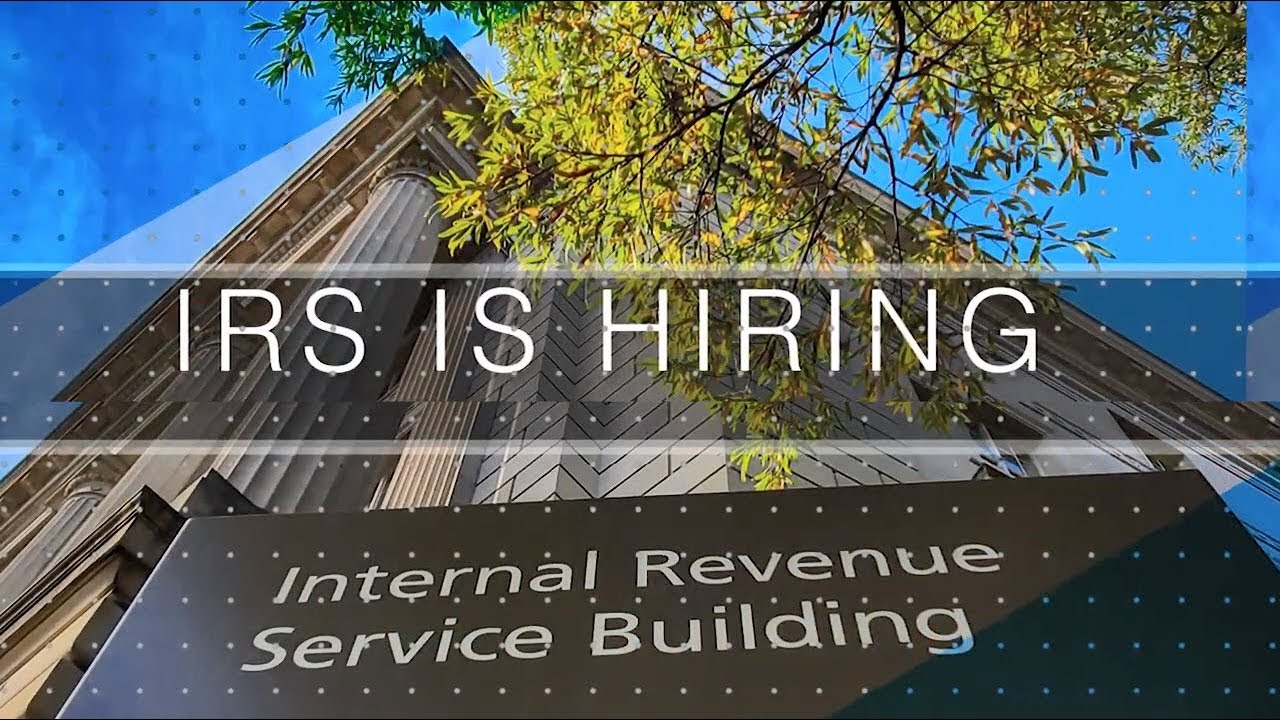
The IRS Is Hiring More Lawyers

Do you read the want ads? You should. You never know when a job opening will be posted that will help you make a career move. By the way — job search expenses can be tax-deductible even if you don’t find a job.

Job search expenses include subscriptions, printing resumes, mailing resumes, hiring someone to write your resume, traveling to interviews, even buying lunch for a headhunter. Job search expenses also include taking out a position wanted ad, having professional headshots taken, or paying a job service.

But let’s get back to reading the want ads.

Sometimes the want ads will tip you off to what other businesses are doing. If your competition is hiring shipping clerks perhaps that’s a sign that they just landed a big sales contract.

Sometimes the want ads will tip you off to what the IRS is doing. Well, the IRS just posted some help wanted ads for 200 lawyers. And why does the IRS want 200 more lawyers?

The IRS wants those lawyers to go after abusive tax shelters.

Some of those tax shelters use bogus, inflated, and unwarranted tax deductions.
Some abuses involve land schemes.
Some abuses involve insurance schemes.
The IRS wants the 200 lawyers to come up with regulations to stop these abuses and the IRS wants the lawyers to take the cases to court.

So reading the want ads tells us the IRS is stepping up its work against tax shelters and abusive business transactions. And that’s a warning.

Now, if you’re facing a tax issue, and if you don’t have a tax lawyer to call — call us now for a free consultation. We’ll let you know if you need a lawyer. Or even if you can resolve the tax issue on your own.

Call now for a free consultation with Legal Tax Defense.

Disclaimer: Alan Mendelson is a well-known TV consumer news reporter who reports on tax issues. You should seek professional advice if you have tax questions or issues. 

Five Top Tax Tips Before You File

Here are some very important tax tips to follow before you file your return. While these might seem obvious it’s surprising that they aren’t always used or followed.

1. File an accurate return and use e-file and direct deposit. If you do these three simple things you could receive your refund in three weeks or less. Rember: be accurate, file online, and use direct deposit.

2. Make sure you have all your records and tax documents before you file. Remember if you forget a 1099 form you’ll face a delay because the IRS will have their copy and they’ll want to know why you didn’t include it. If you omit income not only could your refund be delayed but you may receive a bill from the IRS or even trigger an audit.

3. Be sure your stimulus payment and any advance Child Tax Credit information are correct. Look for letter 6419 that the IRS sent in December that gives you the information you need to file your return properly.

4. There’s also an IRS letter 6475 that will include information about economic impact payments you may have received.

5. Try to use the IRS.gov website to find information. Calling for information could take hours. And I mean hours.

And here’s one more tip. If you have any tax issues, call Legal Tax Defense for a free consultation. Call now for any questions including questions about unfilled returns or bills from the IRS.

Disclaimer: Alan Mendelson is a well-known TV consumer news reporter who reports on tax issues. You should seek professional advice if you have tax questions or issues. 

Where Those Income Statements Go

One of the biggest mistakes a taxpayer can make — and it’s a mistake that can trigger an audit by the IRS — is overlooking or ignoring a W2 or 1099 earnings statement sent by an employer or business.

Copies of those forms are sent to the IRS where they are loaded into computers and held. It’s also been the law since 2015 that copies of your W2 income statements also go to the Social Security Administration, and that helps you get your benefits.

But let’s talk about the copies sent to the IRS. They are there waiting for your tax return to arrive. And when your tax return arrives the IRS will check to be sure that what’s on your tax return and what’s in their computers match.

It’s the match game that decides if your tax return and refund will sail through, or if you will get a letter and a bill from the IRS or even an audit notice.

January 31, 2022, is the deadline for businesses to send out those tax forms but in some cases, businesses can get an extension for sending them out.

Once they arrive the tax season officially starts.

It’s also the start of the IRS fraud and fraud detection season. Those computer files verify refund claims also. Fraud has become a big problem but these computer records can stop it.

January 31st is coming. Get ready.

Disclaimer: Alan Mendelson is a well-known TV consumer news reporter who reports on tax issues. You should seek professional advice if you have tax questions or issues. 

Top Audit Red Flags

Should you really be worried about being audited by the IRS? Overall, only about 1% of tax returns are audited each year.

But here are the red flags that could put you at the head of the line for an audit.

Reason #1 If the IRS thinks you are claiming too many deductions or you’re failing to report all your income you could be flagged.

Reason #2 There are math errors on your tax return.

Reason #3 You failed to report income on tax forms like 1099s and W2s. The IRS gets copies of those forms that are sent to you.

Reason #4 Too many deductions than other taxpayers like you.

Reason #5 If you deduct too many miles on your vehicle for business use.

Reason #6 You have a cryptocurrency account and you fail to report your transactions.

Reason #7 If you have a cash business you could be flagged for an audit.

Reason #8 If you claim the Earned Income Tax Credit you could be audited because the IRS wants to be assured you’re entitled to the tax savings.

Reason #9 Self-employed taxpayers could be flagged for an audit because they may have lots of deductions.

Reason #10 If you deduct a home office you could be flagged.

Those are the top reasons for an audit. But don’t be afraid to claim deductions and tax breaks that you are entitled to.

Still not sure what to deduct for your current income tax? Call us today for immediate help. Our tax attorney and tax professionals can get you the best deduction.

Disclaimer: Alan Mendelson is a well-known TV consumer news reporter who reports on tax issues. You should seek professional advice if you have tax questions or issues. 
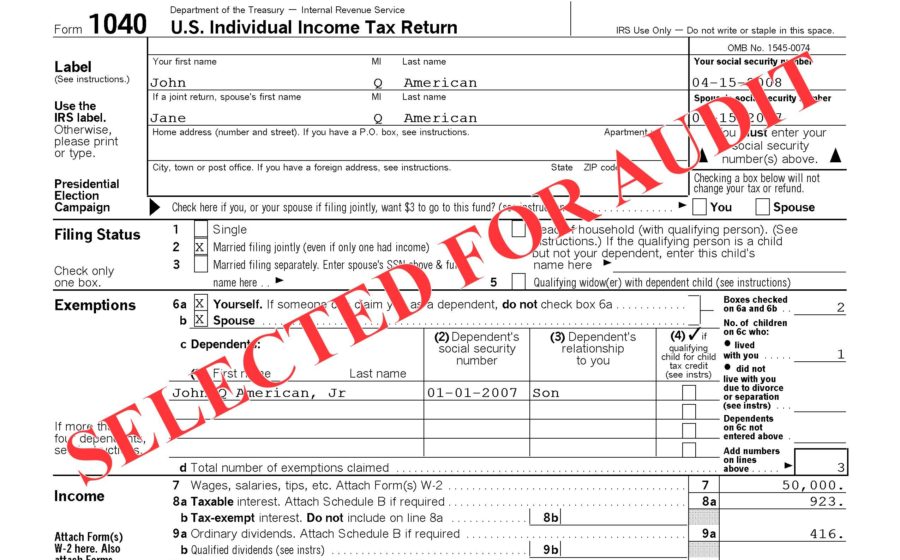
IRS Audits: What Are Your Chances?

Let’s talk about IRS audits and your chance of being picked for an audit.

I’m not a tax professional but as a news reporter, I’ve looked into this subject for years and years. I’ve interviewed tax professionals and IRS officials and I’ve been through tax audits myself, so this information is pretty good.

First of all, your chance of being picked for an audit overall is pretty slim. In general, fewer than one out of a hundred tax returns are audited.

But in reality, every tax return is checked over by the IRS and if the IRS finds an error you’ll get a letter and a bill from the IRS. But if the problems stand out you’ll get picked for an audit.

Let’s talk about the basic simple errors that will result in a letter and a bill from the IRS.

Number one — you omitted a tax form. These tax forms might include 1099 for a part-time job or for bank interest. Or maybe you forget to include a tax form for a casino jackpot.

Remember, when a tax form is sent to you, a copy is sent to the IRS.

Number two — you made a math error. You’ll get a letter from the IRS.

Now, what might trigger an actual audit? Well if you admit too many casino jackpots or claim too many deductions for your kind of job the IRS will want to talk to you.

Years ago when I got my tax audited, the first thing the IRS auditor asked me was “how are the kids?” I said they were great. I also said it was nice of you to ask. And that’s when I was told that some people who claimed they had kids might say “what kids?”

This year the IRS will be looking closely at cryptocurrency, home office deductions, taxes on unemployment insurance benefits, and also profits on real estate and taxes.

Remember if you have tax issues Legal Tax Defense will give you a free consultation. Call now for your free consultation.

Disclaimer: Alan Mendelson is a well-known TV consumer news reporter who reports on tax issues. You should seek professional advice if you have tax questions or issues. 

IRS And the Gig Economy

During the pandemic, a lot of us lost our regular jobs and many of us took part-time jobs or we entered the gig economy. The IRS is well aware of the change and now the IRS has a section on its website with all sorts of information about the gig economy — and you guessed it — the information is there to make sure that the IRS collects taxes on the gig economy.

The IRS says you must file a tax return if you have net earnings from self-employment of $400 or more from gig work. Gig work includes a side job, part-time work, or temporary work.

If your gig work means you are an employee then your employer should withhold tax from your paycheck. There’s been a lot of controversy about whether or not drivers for ride-sharing services are employees or not. If you are working as a gig worker for a business ask about your status. Will the employer withhold taxes or are you obligated to file your own estimated taxes each quarter?

There are all sorts of jobs that are considered gig jobs and with those jobs come taxes.

Gig workers who drive passengers or make deliveries have to pay taxes.
If you rent out property or part of your property — you rent out your house or a room — you’re part of the gig economy. Be ready to pay taxes.

You sell goods online or you rent out equipment — you’re in the gig economy.

You do freelance work writing ads or painting signs — you’re in the gig economy.

Since you’re in the gig economy you should be keeping track not only of your income but also keep track of your expenses. Those expenses can help lower your tax bill.

Remember that quarterly tax payments are expected.

And if you worked for a business you could receive a 1099 or a W-2 by the end of January.

The bottom line here is to keep track of your expenses. I’ll say it again — keep track of your expenses. It’s tough these days and you don’t want to pay more taxes than you have to.

Remember, Legal Tax Defense has a tax attorney that offers a free consultation if you have tax problems. Call now for your free consultation.

Disclaimer: Alan Mendelson is a well-known TV consumer news reporter who reports on tax issues. You should seek professional advice if you have tax questions or issues. 

Knowing Your Deductions

One of the important things to remember when you file your taxes each year is that there is a standard deduction and there are itemized deductions.

The standard deduction amount increases slightly every year and varies by the filing status of the taxpayer. The standard deduction will vary for single taxpayers, for married taxpayers, for taxpayers 65 years of age or older, and so forth. Not every taxpayer can use the standard deduction, and sometimes the standard deduction is better than itemized deductions.

Talk to your tax pro about which deduction you can use… standard or itemized.

If you use itemized deductions it’s important that you get your records together. Itemized deductions go on Schedule A.

There are all kinds of itemized deductions, and the better organized you are, the easier it will be to track your expenses and take your deductions. I like to use the simple envelope system to keep track of my deductible expenses. It is simple, it’s one envelope for each category.

Category #1 is state and local income taxes and sales taxes.
Category #2 is real estate and personal property taxes.
Category #3 is interest on your home mortgage.
Category #4 is any insurance you pay on a home mortgage.
Category #5 is losses from a federally declared disaster such as a hurricane or tornado.
Category #6 gifts to a charity and don’t forget the mileage to drive to the charity.
Category #7 is unreimbursed medical and dental expenses.

Now there are limitations on some of these deductions. For example, medical and dental expenses — and these include mileage for driving to doctors and to pharmacies — must exceed 7.5% of your adjusted gross income. Your tax pro can explain this to you — or you can find the instructions in your tax booklet that the IRS sends you.

The deduction for state and local taxes may also be limited.

If you do your taxes yourself and you use a software program, most of these programs do a very good job of reminding you what is deductible and how you can enter these expenses. A tax professional will also guide you.

In 2021 many of us worked from home, so you may want to claim home office deductions, as well as expenses for office supplies that you bought and used at home. Remember there are job search expenses even if you didn’t find another job.

I urge you to read the instructions that the IRS sends you, pay attention to the questions that your income tax computer software asks you, and pay attention to what your tax professional says to you.

Small deductions can add up to significant money.

And remember, if you have a tax problem or issue, call now for a free consultation. And get those envelopes ready and start sorting out your tax-deductible expenses. It might be a good idea now to start the envelope system for 2022 expenses.

Wrote by Alan Mendelson. Follow us for more of my tax tips.

Disclaimer: Alan Mendelson is a well-known TV consumer news reporter who reports on tax issues. You should seek professional advice if you have tax questions or issues. 
It’s Also Retirement Account Season

This is not only tax season — but it’s also retirement account season. Between now and tax deadline day you are going to hear a lot about making contributions to your retirement accounts. Banks, stockbrokers, gold and silver dealers, even cryptocurrency companies are going to be advertising for your retirement money.

I tell you all the time to talk to a professional before you make decisions about your taxes — and when it comes to putting money into retirement accounts you really need to talk to professionals.

Let me repeat that because it’s very important — talk to professionals about your options for retirement accounts. You need to talk to them because there are all sorts of issues you must consider.

Some retirement fund contributions give you tax deductions now — and some don’t.

Some retirement funds grow tax-deferred.

Some retirement funds have limits based on your income.

If you’re getting near retirement age you may be allowed to contribute more than someone who is younger.

There are so many things to consider.

Some retirement funds let you withdraw your money without penalties, some have penalties until you reach retirement age.

But let’s consider the big question. Should you even put money into a retirement plan?  The answer is basically yes — but there may be some exceptions.

For example, if you have big credit card bills and you’re paying very high-interest rates it might be better off for you to skip a retirement contribution this year and instead pay down your debt.

And if you’re saving to buy a home — keeping the money aside for your downpayment might be the right thing to do.

This is why you need to talk to a professional. And talk to your significant other or your closest family members. This is not a simple decision to make.

And I’m going to make another suggestion. Don’t talk to just one professional. Talk to several, because when you talk to a professional at a bank and you talk to a professional at a gold dealer, and when you talk to a professional at a stock brokerage, you’re going to get different opinions.

Frankly, when it comes to retirement plans, when you talk to three different professionals you’re going to get at least four different opinions.

Remember, Legal Tax Defense will give you a free consultation if you have tax issues. Call now for immediate help.

I’m Alan Mendelson. follow us for more tax tips.

Disclaimer: Alan Mendelson is a well-known TV consumer news reporter who reports on tax issues. You should seek professional advice if you have tax questions or issues. 

Ghost Tax Preparers and Scams

An important tax tip for 2022 is to get your taxes done early because you don’t want to be caught with a last minute surprise about owing money to the IRS. This next tax tip for 2022 might sound obvious but it needs repeating: choose your tax return preparer carefully.

Every year there are Ghost preparers who rip off taxpayers. A ghost preparer is a paid tax preparer who doesn’t sign returns and tried to hide their identity from the IRS.

By law, anyone who is paid to prepare or assists in preparing federal tax returns must have a valid Preparer Tax Identification Number, or PTIN. Paid preparers must sign and include their PTIN on the return. Not signing a return is a red flag that the paid preparer may be looking to make a fast buck by promising a big refund or charging fees based on the size of the refund.

Unscrupulous tax return preparers may also:

  • Require payment in cash only and not provide a receipt.
  • Invent income to qualify their clients for tax credits.
  • Claim fake deductions to boost the size of the refund.
  • Direct refunds into their bank account, not the taxpayer’s account.

Choose a tax return preparer wisely.

Taxpayers should verify both their routing and bank account number on the completed tax return for any direct deposit refund. And taxpayers should watch out for preparers putting their bank account information onto the returns.

Remember Legal Tax Defense will give you a free consultation. It really is a free consultation about your tax issues. In many cases, they can tell you how to fix your tax problems yourself without paying them a cent.

Disclaimer: Alan Mendelson is a well-known TV consumer news reporter who reports on tax issues. You should seek professional advice if you have tax questions or issues. 

An IRS Deadline Approaches

Do you need to make an estimated income tax payment? If you do need to make an estimated payment for the fourth quarter of 2021 the deadline to make the payment is on January 18th.

If you don’t have sufficient payments made to the IRS during the year you could be hit with a penalty.

Most of us make our payments during the year through our payroll deductions. But if you had outside income — for example you sold stock or cryptocurrency for a big profit — you may need to make an additional payment.

Remember the tax system is a pay-as-you-go system. If you don’t pay in enough you can be penalized. And remember January 18th is the deadline to catch up on those underpayments.

This year, as many as 25 million Americans could be in for a surprise — they could owe serious money to the IRS because they collected unemployment insurance benefits during the pandemic.

Unemployment insurance benefits are taxable. If you had withholding — well good for you. You might not owe the IRS anything. But many recipients of unemployment benefits during the pandemic did not have withholding because they lost their jobs and they needed all of that unemployment money that came each week.

Well now it’s time to pay the piper — yes, it’s time to pay the IRS.

And guess what — there is no forgiveness of the unemployment benefits in 2021. In 2020 Congress pushed through legislation so you didn’t have to pay taxes on about ten thousand dollars of your unemployment money. But there is no such deal for the unemployment money paid in 2021.

You might owe the IRS a good chunk of cash this year.

Remember, it’s always best to consult with a tax professional. And call my friends at Legal Tax Defense for a free consultation.

Disclaimer: Alan Mendelson is a well-known TV consumer news reporter who reports on tax issues. You should seek professional advice if you have tax questions or issues. 

-phone call button 1/11/2024-