

Reporting Your Tips

It’s no surprise that tip income from jobs is taxable. We all know that workers such as waiters and waitresses and valets and casino dealers and hotel room cleaners pay taxes on their tip income. But what might surprise us is the details that the IRS has in its rules about tips.

Here are some of those surprising details.

First of all, the IRS says all tips that workers receive must be reported in their gross income. This includes:

Tips directly from customers.
Tips added using credit, debit, or gift cards.
Tips from a tip-splitting arrangement with other employees.
In case you don’t know, when you tip a cocktail waitress that waitress may have to split the tip with a bartender.

The waiter or waitress serving your food may be sharing the tip with a busboy or cleaner or kitchen workers.

When you tip your hairstylist the stylist might be sharing the tip with others in the hair salon.

And when you tip a casino dealer, that dealer may have to split that tip with other dealers and with other casino employees including chip runners and other employees who normally aren’t tipped.

Car valets may share their tips with other valets.

The IRS says even non-cash tips are taxable.
The value of non-cash tips, such as tickets, passes or other items of value is also income and subject to tax.

The IRS says if you get tips on your job there are three things to follow to correctly report tip income.

Keep a daily tip record.
Report tips to the employer.
Report all tips on their income tax return.
The IRS also has rules for employers.

The IRS says if an employee receives $20 or more in any month, the employee must report their tips for that month to their employer by the 10th day of the next month. The employer must withhold federal income, Social Security, and Medicare taxes on the reported tips.

So think about that the next time you tip. Not only is the tip taxed but the employee might be sharing that tip with others.

Remember, the tax attorney at Legal Tax Defense offers a free consultation on tax issues and unfortunately, workers who receive tips can be targeted for tax audits. Call now for your free consultation. And go to www.LegalTaxDefense.com for more helpful information.

Disclaimer: Alan Mendelson is a well-known TV consumer news reporter who reports on tax issues. You should seek professional advice if you have tax questions or issues. 

Taxing Social Security Benefits

You’ve heard this before: with one hand Uncle Sam gives, and with the other hand Uncle Sam takes away.

That applies to some Social Security benefits because with one hand Uncle Sam gives Social Security benefits and with the other hand, the hand that belongs to the IRS, some of those benefits can be taken away.

Here are some of the things you should know about Social Security and taxes. And remember always consult with a tax professional.

Social Security benefits include monthly retirement benefits, survivor and disability benefits. They can be taxed.

But if you receive supplemental security income payments — the good news is they are not taxable.

So how much of your social security retirement benefits and survivor and disability benefits are taxable? The portion of benefits that are taxable depends on the taxpayer’s income and filing status.

To determine if their benefits are taxable, taxpayers should take half of the Social Security money they collected during the year and add it to their other income. Other income includes pensions, wages, interest, dividends, and capital gains.

If they are single and that total comes to more than $25,000, then part of their Social Security benefits may be taxable.
If they are married filing jointly, they should take half of their Social Security, plus half of their spouse’s Social Security, and add that to all their combined income. If that total is more than $32,000, then part of their Social Security may be taxable.
Fifty percent of a taxpayer’s benefits may be taxable if they are:

Filing single, head of household, or qualifying widow or widower with $25,000 to $34,000 income.
Married filing separately and living apart from their spouse for all of 2020 with $25,000 to $34,000 income.
Married filing jointly with $32,000 to $44,000 income.
Up to 85% of a taxpayer’s benefits may be taxable if they are:

Filing single, head of household, or qualifying widow or widower with more than $34,000 income.
Married filing jointly with more than $44,000 income.
Married filing separately and living apart from their spouse for all of 2021 with more than $34,000 income.
Married filing separately and living with their spouse at any time during 2021.
Again, consult with a tax professional. Review the IRS instructions. But most importantly don’t think your Social Security money is automatically tax-free. But supplemental security income benefits are not taxable.

And remember tax attorney at Legal Tax Defense will give you a free consultation on tax issues. Call now to speak to a tax professional. You’ll also find more information here: www.LegalTaxDefense.com so check it out.

Disclaimer: Alan Mendelson is a well-known TV consumer news reporter who reports on tax issues. You should seek professional advice if you have tax questions or issues. 

Break Through The IRS Logjam

The IRS has a big problem this year. The IRS is overwhelmed with work: too many tax returns, old computers, too few people on the job because of Covid, too many phone calls seeking help, and even 2020 tax returns haven’t been processed yet.

This will surprise you but there are still taxpayers waiting for their 2020 refunds!

About three-quarters of taxpayers get a refund from the IRS. And if that’s you, you don’t want to wait months or even a year to get it.

You should be able to get it in about three weeks if you follow the correct steps outlined by the IRS.

Here they are.

First, do not file your return until you have and include all year-end statements including all W-2s and 1099s, and the two statements issued by the IRS — Letter 6419 showing the total advance Child Tax Credit payments, and Letter 6475, showing the total EIP3 payments. The EIP is the Economic Impact Payments many people received during the pandemic.

Second, don’t make mistakes. Any mistake including a math mistake or omitting a W2G or a 1099 will trigger a delay and a letter.

Third, file electronically. If you file by snail mail it could be months before your envelope is opened.

For most Americans, the tax filing deadline is April 18, 2022. For residents of Maine and Massachusetts, the deadline is April 19, 2022. For Americans who live and work abroad, it’s June 15, 2022. Anyone who needs more time to file can get an automatic extension until Oct. 17, 2022.

Remember if you have tax problems and issues the tax attorney at Legal Tax Defense will give you a free consultation. Call now for your free consultation.

Disclaimer: Alan Mendelson is a well-known TV consumer news reporter who reports on tax issues. You should seek professional advice if you have tax questions or issues. 

California Tax Tips

The State of California has its own income tax program and its own rules. Here are some key things to be aware of for the 2022 tax season.

Like with the IRS, the California Franchise Tax Board (FTB) wants you to file online for speed and accuracy.

You might also qualify for low and middle-income tax credits.

Here’s what the FTB has announced:

Californians with income up to $30,000 may qualify for the California Earned Income Tax Credit.

Those who are eligible for the CalEITC and have a child age 5 or younger also may receive up to $1,000 from the Young Child Tax Credit.

California employers can receive a hiring tax credit for each qualified homeless individual they hire. The credit is worth up to $30,000 for businesses.

Californians who did not have qualifying health insurance throughout the year 2021 are subject to a penalty of $800 or more when they file their state tax returns. There are also penalties if your dependent child doesn’t have insurance. A family of four could face a penalty of $2400 or more.

Like with your IRS tax return, always consult with a tax professional if you have any questions or problems.

Remember that Legal Tax Defense offers a free consultation on federal and state tax issues. Call now for your free consultation with a tax debt attorney.

Disclaimer: Alan Mendelson is a well-known TV consumer news reporter who reports on tax issues. You should seek professional advice if you have tax questions or issues. 

California Offer In Compromise

The State of California’s Franchise Tax Board (FTB) like the IRS has an “offer in compromise” program for those who can’t pay their taxes. The OIC (offer in compromise) program allows you to offer a lesser amount for “payment of an undisputed tax liability.”

Sure, you could look up the California OIC program on the Internet on your own, and act on it, but should you?

I suggest you get professional guidance. I think you need a professional especially because the California OIC is for a “undisputed” tax liability. My first question is do you really want to throw in the towel? Perhaps you don’t really owe what the FTB says you owe? This is why you need to talk to a tax professional.

Even if you go ahead with the California OIC program it’s not easy or simple. Here are the steps the FTB says you must take:

  1.  You must explore payment options including a payment plan.
  2.  You must have filed all required tax returns. And the third condition really stands out:
  3.  You must agree with the amount the FTB says you owe.

That third condition is something you really need to think about.

The OIC also has other conditions you should discuss with a tax professional.

The FTB will want to know about your ability to pay and the value of your assets, your income, even the potential that your circumstances can change. You really need professional guidance to answer these questions.

Also, the FTB wants a lump sum payment.

I think you’ll agree — you don’t want to do this on your own.

Legal Tax Defense offers a free consultation to resolve tax problems. Call now to speak to a tax attorney for free.

Disclaimer: Alan Mendelson is a well-known TV consumer news reporter who reports on tax issues. You should seek professional advice if you have tax questions or issues. 
IRS Stops Sending Certain Delinquency Notices

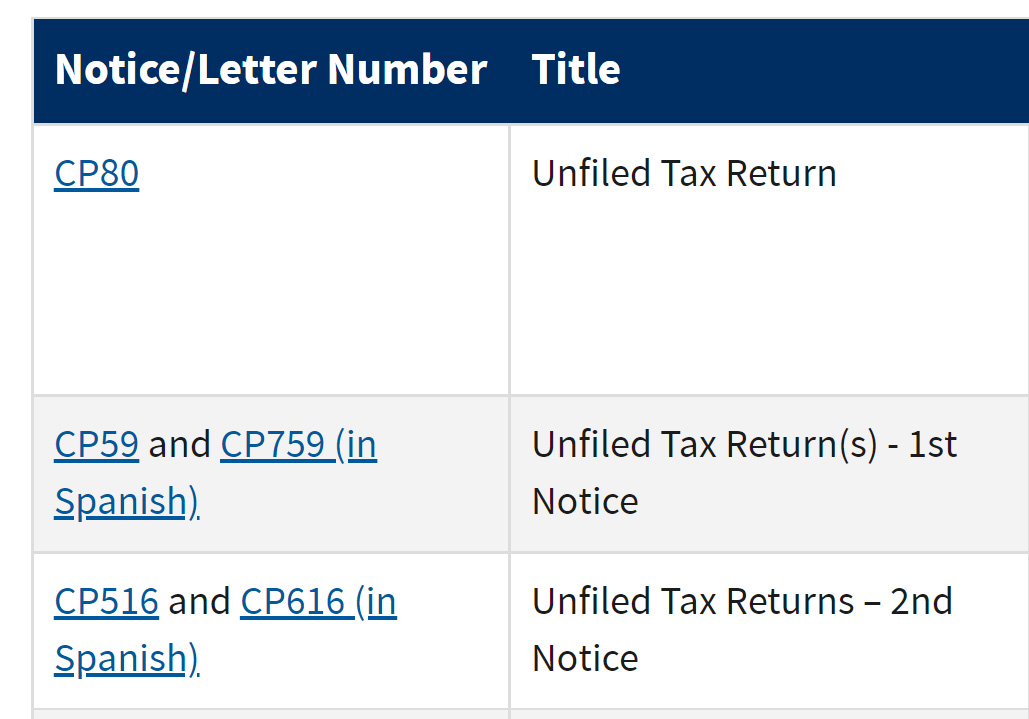
The IRS has just announced that it has stopped sending certain letters to taxpayers who owe money or haven’t filed tax returns in previous years.

However, this doesn’t mean you’re off the hook for paying the money you owe and this doesn’t mean you’re off the hook for filing tax returns from previous years.

In fact, the IRS is warning taxpayers that even though certain letters about taxes owed and tax returns that were not filed are not being sent out, interest and penalties may still be accruing.

So if you know you owe money, or if you know you have back tax returns that have not been filed, you should still get your situation fixed.

This is why you should call Legal Tax Defense for your free consultation. Call 800-231-3321.

Legal Tax Defense is happy to give you this free consultation. If your tax problems are not serious the experts at Legal Tax Defense will tell you how to fix your tax problems on your own.

In many cases, a tax debt of up to $10,000 can be handled by the taxpayers themselves.

When you make the free call to Legal Tax Defense they will listen to your situation. Yes, they’ll really listen. They want to understand your problem and issues. Many times the experts at Legal Tax Defense will tell you that you don’t need a professional service and you can resolve your issues on your own without paying for professional guidance. In fact, if you can resolve your issues on your own the experts at Legal Tax Defense will tell you how to do it.

As many of you know I’ve been a TV news reporter for many years. You’ve seen me on CBS, CNN, and CNBC. Over the years I’ve reported on the services of Legal Tax Defense and I know this is an organization where you will get the proper guidance and best services.

If you have tax issues don’t go another sleepless night. Make the free call. The IRS might have stopped sending out letters but the tax issues and the interest and penalties are not going away.

You need professional guidance. Call now to speak to a tax attorney for Free.

Disclaimer: Alan Mendelson is a well-known TV consumer news reporter who reports on tax issues. You should seek professional advice if you have tax questions or issues. 

A Special Year for Filing Taxes

2022 will be a special year for filing IRS tax returns because the pandemic made new tax breaks available. Because of these tax breaks, low-income persons who weren’t required to file tax returns before will want to file returns now for the tax year 2021.

You need to file a 2021 federal income tax return to take advantage of key tax benefits included in the American Rescue Plan and other recent legislation.

Even if you have little or no income from a job, business, or other sources you may be able to take advantage of these laws. Claiming these benefits could put money in your pocket.

These benefits include:

An expanded Child Tax Credit: Families can claim this credit, even if they received monthly advance payments during the last half of 2021.
An increased Child And Dependent Care Credit: Families who pay for daycare so they can work or look for work can get a tax credit worth up to $4,000 for one qualifying person and $8,000 for two or more qualifying persons.

A more generous Earned Income Tax Credit: The American Rescue Plan boosted the EITC for childless workers. There are also changes that can help low- and moderate-income families with children.

The Recovery Rebate Credit: Those who missed out on last year’s third round of Economic Impact Payments (EIP3), also known as stimulus payments, may be eligible to claim the RRC. This credit can also help eligible people whose EIP3 was less than the full amount, including those who welcomed a child in 2021.

A Deduction For Gifts To Charity: The majority of taxpayers who take the standard deduction can deduct eligible cash contributions they made during 2021. Married couples filing jointly can deduct up to $600 in cash donations and individual taxpayers can deduct up to $300 in donations. In addition, itemizers who make large cash donations often qualify to deduct the full amount in 2021.
If you have any questions talk to a tax professional. The IRS provides free assistance especially for low-income Americans and there are now expanded help times on Saturdays.

And if you have a tax problem, Legal Tax Defense will give you a free consultation. Call now to speak to a tax attorney. It’s free and we can help you with tax audits, garnishments, and filing back taxes to get the refunds you are due.

Disclaimer: Alan Mendelson is a well-known TV consumer news reporter who reports on tax issues. You should seek professional advice if you have tax questions or issues. 

Tax Forms You Need to File

While it’s important to file your taxes on time to avoid penalties, and while some folks want to file early so that they get their refund faster, it’s also very important that you don’t file your tax return prematurely.

If you file before you have all your payment information such as 1099s it could delay your tax return.

And you certainly don’t want to file your return before you have all your tax deductions sorted out. Missing deductions could cost you money.

Here are some of the important forms you must have:

  • Forms W-2 from employer(s)
  • Forms 1099 from banks, issuing agencies, and other payers including unemployment compensation, dividends, and distributions from a pension, annuity, or retirement plan
  • Form 1099-K, 1099-Misc, W-2, or other income statements if you worked in the gig economy
  • Form 1099-INT if you received interest payments
  • Other income documents and records reporting virtual or cryptocurrency transactions
  • Form 1095-A, Health Insurance Marketplace Statement, to reconcile advance Premium Tax Credits for Marketplace coverage
  • Letter 6419, 2021 Total advance Child Tax Credit Payments to reconcile advance Child Tax Credit payments
  • Letter 6475, 2021 Economic Impact Payment, to determine eligibility to claim the Recovery Rebate Credit

Remember that the IRS gets copies of these forms. If you omit them it will prompt the IRS to delay your return processing. Legal Tax Defense offers a free consultation on tax issues. Call now to speak to a tax attorney.

Disclaimer: Alan Mendelson is a well-known TV consumer news reporter who reports on tax issues. You should seek professional advice if you have tax questions or issues. 
Home Office Deductions

Because so many of us worked from home during the pandemic we might be entitled to home office deductions. So, just what is and is not tax-deductible?
Generally, you can’t deduct expenses related to the rent, purchase, maintenance, and repair of a personal residence. But if you use a portion of your home for business, you may be able to take a home-office deduction if you meet certain requirements.

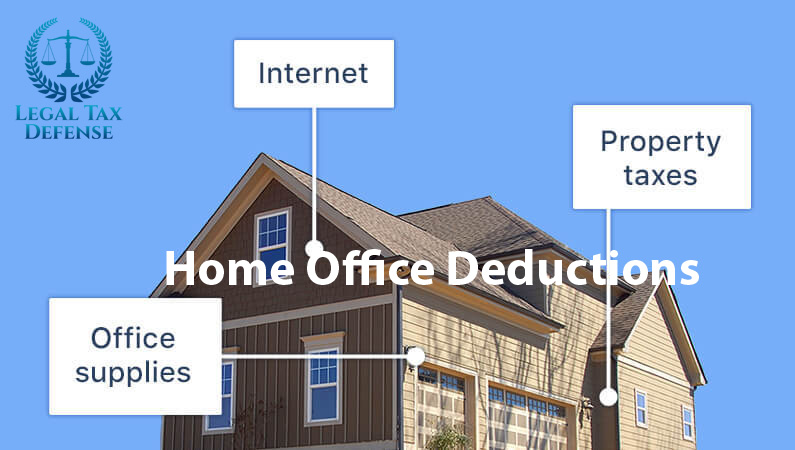
Deductible expenses might include the business portion of real estate taxes, mortgage interest, rent, utility, insurance, depreciation, painting, and repairs.

Those who work out of their homes are entitled to deduct ordinary and necessary expenses related to the business.

Your deductions are limited to a specific area of your home that is used only for trade or business. And “regular use” means it’s used regularly, not just occasionally or incidentally.

And that’s important because both conditions must apply.

Also, if you work as someone’s employee, you can claim this deduction only if the regular and exclusive business use of the home is for your employer’s convenience, not yours, and your employer does not rent the business portion of your home. If your employer told you to work from home during the pandemic the employer’s convenience is established.

Here are some business uses that are acceptable for deductions:

You meet or deal with patients, clients, or customers there.

You have a separate, free-standing structure not attached to the home, such as a studio, garage, or barn that you use exclusively and regularly for your trade or business.

You have a separate, identifiable part of your home that you use regularly for storage, such as inventory or product samples, as rental property, or as a home daycare facility.

Remember that personal, family, and living expenses are not deductible under any circumstances.

A common error is to deduct expenses for a portion of the home that is not regularly used or exclusively used for business.

It’s important to understand the rules, compute the deductions correctly, and keep accurate records for these deductions. It is always advisable to consult with a tax professional.

Remember that the tax attorney at Legal Tax Defense offers a free consultation about tax issues you might have. Call now for your free consultation.

Disclaimer: Alan Mendelson is a well-known TV consumer news reporter who reports on tax issues. You should seek professional advice if you have tax questions or issues. 

Changes In the EITC

The IRS has announced changes that can really help low and middle-income workers. It involves changes to the Earned Income Tax Credit. If you know anyone including seniors who struggled to work in 2021 and had low income these changes can put money in their pockets.

This is from an IRS news release that summarizes some key changes:

“For 2021 only, more childless workers and couples can qualify for the EITC, and the maximum credit is nearly tripled for these taxpayers. For the first time, the credit is now available to both younger workers and senior citizens.”

The IRS news release continues:

“For 2021, the EITC is generally available to filers without qualifying children who are at least 19 years old with earned income below $21,430; $27,380 for spouses filing a joint return. The maximum EITC for filers with no qualifying children is $1,502, up from $538 in 2020. There are also special exceptions for people who are 18 years old and were formerly in foster care or are experiencing homelessness. Full-time students under age 24 don’t qualify. There is no upper age limit for claiming the credit if taxpayers have earned income. In the past, the EITC for those with no dependents was only available to people ages 25 to 64.”

That completes the excerpt from the IRS release.

Remember Legal Tax Defense assists taxpayers with IRS and other local tax issues. They do offer a free consultation. Call now for your free consultation.

Always consult with tax professionals when you have tax issues. Always consult with professionals who are in good standing with the IRS. You don’t want to fall victim to tax scams such as having your refund stolen.

Disclaimer: Alan Mendelson is a well-known TV consumer news reporter who reports on tax issues. You should seek professional advice if you have tax questions or issues. 

-phone call button 1/11/2024-