

Free Taxpayer Help

There is free taxpayer help. Most taxpayers know they can call the IRS directly with their questions but the reality is when you call the IRS and you owe money the information you’ll receive is probably limited to how to pay it.

But what if you question a bill from the IRS? Who is there to help you?

Of course, you should always use a tax professional — but what if you can’t afford a professional’s charges?

That’s where the Low-Income Tax Clinics might be able to help you. The Low-Income Tax Clinics are funded by the federal government as part of a taxpayer advocacy program and it is independent of the IRS.

LITCs represent individuals whose incomes are generally at or below 250% of the federal poverty guideline and who are seeking to resolve tax problems with the IRS, such as audits, appeals, and tax collection disputes. LITCs can represent taxpayers in court as well as before the IRS. They also can provide information about taxpayer rights and responsibilities in different languages. LITCs provide services for free or a small fee. They receive IRS grants but work independently to assist and advocate for taxpayers. The LITC uses volunteers.

For the list of LITC locations and phone numbers get IRS publication 4134.

Community organizations and unions often offer tax help services. The AARP has a well-known tax help program and local governments also set up free tax help clinics.

Do a Google search for “free tax help near me” for a quick guide to what’s available.

But what if you have a tax issue or problem involving unfiled returns, wage garnishments, money owed, or an audit notice and you can’t get help from the Low-Income Tax Clinics or another free source?

You don’t have to wait in line at some free clinic. Instead, call Legal Tax Defense for a free consultation. You’ll talk to tax professionals and the consultation is free. They’ll listen to your problems and issues and in many cases, they can tell you how to resolve your issue at no cost. Legal Tax Defense has tax attorneys and Enrolled Agents who know how to deal with the IRS.

For your free consultation call 800-231-3321. Don’t wait in line at a tax clinic and don’t wait for those tax clinic days. Call now to speak with a tax attorney.

There’s also free information on the website www.LegalTaxDefense.com but nothing beats that free phone call.

Disclaimer: Alan Mendelson is a well-known TV consumer news reporter who reports on tax issues. You should seek professional advice if you have tax questions or issues. 

Logs & Records You Should Keep for Filing Your Tax Return

The best way to keep certain daily expenses and certain income for filing your tax return is to keep logs. Logs along with official receipts are also some of your best defenses if you are selected for an IRS audit.

Logs of expenses and income can be kept using simple notebooks or as notations in a daily calendar or diary.

Here are some of the logs you should keep:

If you work at a job that involves tip income you should have a daily log of cash tips, tips left on credit card payments, and tips you receive as part of an employee pool.

If you gamble you should have a log of your daily wins and losses, and receipts from ATMs and those W2Gs you receive for jackpots. Remember your losses can be used to offset those jackpot wins. Keep track of the casinos and the dates. By the way, that casino log will give you an up-to-date reminder about how your blackjack card counting is working — or isn’t working, and if that Roulette system was really worth the $49 you paid for it.

If you use your car for work or to look for a job you need a log to track your mileage. You also want a record of your mileage driving to doctors and pharmacies and hospitals.

If you drive for a charity, keep a log. If you drive to donate merchandise, keep a log.

Note the date, time, reason, odometer readings, and purpose in your car logs. The time spent doing this is worthwhile because gas prices are high and the IRS has increased the value of mileage deductions for 2022.

I find that keeping an envelope to hold receipts along with your notebook or notebooks makes record keeping easier.

If you have business expenses, keep a log.
If you buy tools for work, keep a log.
If you have expenses regarding your investments such as buying investing magazines, keep a log.

Logs are best kept when your boss or a business doesn’t keep track of details for you.

Sure, a casino will give you a win/loss statement every year — but if you’re audited by the IRS it’s better to have your log because that win/loss statement from the casino might not be accurate.

And remember, the cost of buying notebooks or diaries for your logs are tax-deductible expenses for tax preparation.

And what’s better than a tax-deductible expense? How about a free consultation from Legal Tax Defense. If you have any tax issues call now to speak to a tax attorney for free. Also, go to their website www.LegalTaxDefense.com for more free information.

Disclaimer: Alan Mendelson is a well-known TV consumer news reporter who reports on tax issues. You should seek professional advice if you have tax questions or issues. 

Free Tax Filing Software

The IRS is estimating that about 70% of taxpayers can use the free tax filing software found on its website IRS.gov and the free tax filing software offered by some of the big tax filing software companies.
There are income limits for using the free software so don’t make the mistake of omitting some income just to save a few bucks on filing. Remember the IRS gets copies of your W2s from jobs and W2Gs from casino winnings and all those 1099s from other sources of income.
Here are the key points to remember about using free tax filing software:
1. Be sure you use direct deposit. The free filing software gives you the opportunity to have a direct deposit of your refund. Without a direct deposit, your refund can take weeks longer to reach you.
2. Remember the income limits. Free filing is available to any person or family who earned $73,000 or less in 2021.
3. But free filing software doesn’t give you the professional advice of a tax pro. Remember that!
4. There are also free filing products for military families.
And here’s something the IRS doesn’t tell you. If you have tax issues or tax problems you can get a free consultation with Legal Tax Defense. Call now to speak to a tax debt attorney for free. In some cases, Legal Tax Defense will tell you how you can resolve your own tax problems without paying a fee. Visit www.LegalTaxDefense.com for more information.

Disclaimer: Alan Mendelson is a well-known TV consumer news reporter who reports on tax issues. You should seek professional advice if you have tax questions or issues. 

Ways to Get Missing Stimulus Checks

The IRS is reminding individuals that they could receive extra money from the economic stimulus programs that paid out money in 2021. Some individuals did not receive all they were entitled to. And the only way to get that money now is to file a 2021 income tax return.

In some cases, individuals who normally don’t file a tax return because of their low income will have to file a tax return now to get this special pandemic payment.

If you think you are missing any of the pandemic stimulus payments you should check into this.

It might be worthwhile to seek free help from the IRS to check into this. Or ask a tax professional.

The 2021 Recovery Rebate Credit — that’s the pandemic money — can reduce any taxes owed or be included in the tax refund for the 2021 tax year.

You may have received Notice 1444-C from the IRS during 2021 as well as Letter 6475. Show these to your tax professional. They will help you know if you’re entitled to more money.

Letter 6475 will be sent out through the month of March so you may not have received it yet.

Remember, low-income individuals who usually do not file IRS returns will have to file in 2022 for the tax year 2021 if they want to get the stimulus money they missed in 2021.

And if you do have to file, file electronically and use the direct deposit option to speed your refund.

And remember that tax attorneys at Legal Tax Defense offer a free consultation on tax issues and problems. Call now for your free consultation. And go to www.LegalTaxDefense.com for more information.

Disclaimer: Alan Mendelson is a well-known TV consumer news reporter who reports on tax issues. You should seek professional advice if you have tax questions or issues. 

Reporting Your Tips

It’s no surprise that tip income from jobs is taxable. We all know that workers such as waiters and waitresses and valets and casino dealers and hotel room cleaners pay taxes on their tip income. But what might surprise us is the details that the IRS has in its rules about tips.

Here are some of those surprising details.

First of all, the IRS says all tips that workers receive must be reported in their gross income. This includes:

Tips directly from customers.
Tips added using credit, debit, or gift cards.
Tips from a tip-splitting arrangement with other employees.
In case you don’t know, when you tip a cocktail waitress that waitress may have to split the tip with a bartender.

The waiter or waitress serving your food may be sharing the tip with a busboy or cleaner or kitchen workers.

When you tip your hairstylist the stylist might be sharing the tip with others in the hair salon.

And when you tip a casino dealer, that dealer may have to split that tip with other dealers and with other casino employees including chip runners and other employees who normally aren’t tipped.

Car valets may share their tips with other valets.

The IRS says even non-cash tips are taxable.
The value of non-cash tips, such as tickets, passes or other items of value is also income and subject to tax.

The IRS says if you get tips on your job there are three things to follow to correctly report tip income.

Keep a daily tip record.
Report tips to the employer.
Report all tips on their income tax return.
The IRS also has rules for employers.

The IRS says if an employee receives $20 or more in any month, the employee must report their tips for that month to their employer by the 10th day of the next month. The employer must withhold federal income, Social Security, and Medicare taxes on the reported tips.

So think about that the next time you tip. Not only is the tip taxed but the employee might be sharing that tip with others.

Remember, the tax attorney at Legal Tax Defense offers a free consultation on tax issues and unfortunately, workers who receive tips can be targeted for tax audits. Call now for your free consultation. And go to www.LegalTaxDefense.com for more helpful information.

Disclaimer: Alan Mendelson is a well-known TV consumer news reporter who reports on tax issues. You should seek professional advice if you have tax questions or issues. 

Taxing Social Security Benefits

You’ve heard this before: with one hand Uncle Sam gives, and with the other hand Uncle Sam takes away.

That applies to some Social Security benefits because with one hand Uncle Sam gives Social Security benefits and with the other hand, the hand that belongs to the IRS, some of those benefits can be taken away.

Here are some of the things you should know about Social Security and taxes. And remember always consult with a tax professional.

Social Security benefits include monthly retirement benefits, survivor and disability benefits. They can be taxed.

But if you receive supplemental security income payments — the good news is they are not taxable.

So how much of your social security retirement benefits and survivor and disability benefits are taxable? The portion of benefits that are taxable depends on the taxpayer’s income and filing status.

To determine if their benefits are taxable, taxpayers should take half of the Social Security money they collected during the year and add it to their other income. Other income includes pensions, wages, interest, dividends, and capital gains.

If they are single and that total comes to more than $25,000, then part of their Social Security benefits may be taxable.
If they are married filing jointly, they should take half of their Social Security, plus half of their spouse’s Social Security, and add that to all their combined income. If that total is more than $32,000, then part of their Social Security may be taxable.
Fifty percent of a taxpayer’s benefits may be taxable if they are:

Filing single, head of household, or qualifying widow or widower with $25,000 to $34,000 income.
Married filing separately and living apart from their spouse for all of 2020 with $25,000 to $34,000 income.
Married filing jointly with $32,000 to $44,000 income.
Up to 85% of a taxpayer’s benefits may be taxable if they are:

Filing single, head of household, or qualifying widow or widower with more than $34,000 income.
Married filing jointly with more than $44,000 income.
Married filing separately and living apart from their spouse for all of 2021 with more than $34,000 income.
Married filing separately and living with their spouse at any time during 2021.
Again, consult with a tax professional. Review the IRS instructions. But most importantly don’t think your Social Security money is automatically tax-free. But supplemental security income benefits are not taxable.

And remember tax attorney at Legal Tax Defense will give you a free consultation on tax issues. Call now to speak to a tax professional. You’ll also find more information here: www.LegalTaxDefense.com so check it out.

Disclaimer: Alan Mendelson is a well-known TV consumer news reporter who reports on tax issues. You should seek professional advice if you have tax questions or issues. 

Break Through The IRS Logjam

The IRS has a big problem this year. The IRS is overwhelmed with work: too many tax returns, old computers, too few people on the job because of Covid, too many phone calls seeking help, and even 2020 tax returns haven’t been processed yet.

This will surprise you but there are still taxpayers waiting for their 2020 refunds!

About three-quarters of taxpayers get a refund from the IRS. And if that’s you, you don’t want to wait months or even a year to get it.

You should be able to get it in about three weeks if you follow the correct steps outlined by the IRS.

Here they are.

First, do not file your return until you have and include all year-end statements including all W-2s and 1099s, and the two statements issued by the IRS — Letter 6419 showing the total advance Child Tax Credit payments, and Letter 6475, showing the total EIP3 payments. The EIP is the Economic Impact Payments many people received during the pandemic.

Second, don’t make mistakes. Any mistake including a math mistake or omitting a W2G or a 1099 will trigger a delay and a letter.

Third, file electronically. If you file by snail mail it could be months before your envelope is opened.

For most Americans, the tax filing deadline is April 18, 2022. For residents of Maine and Massachusetts, the deadline is April 19, 2022. For Americans who live and work abroad, it’s June 15, 2022. Anyone who needs more time to file can get an automatic extension until Oct. 17, 2022.

Remember if you have tax problems and issues the tax attorney at Legal Tax Defense will give you a free consultation. Call now for your free consultation.

Disclaimer: Alan Mendelson is a well-known TV consumer news reporter who reports on tax issues. You should seek professional advice if you have tax questions or issues. 

California Tax Tips

The State of California has its own income tax program and its own rules. Here are some key things to be aware of for the 2022 tax season.

Like with the IRS, the California Franchise Tax Board (FTB) wants you to file online for speed and accuracy.

You might also qualify for low and middle-income tax credits.

Here’s what the FTB has announced:

Californians with income up to $30,000 may qualify for the California Earned Income Tax Credit.

Those who are eligible for the CalEITC and have a child age 5 or younger also may receive up to $1,000 from the Young Child Tax Credit.

California employers can receive a hiring tax credit for each qualified homeless individual they hire. The credit is worth up to $30,000 for businesses.

Californians who did not have qualifying health insurance throughout the year 2021 are subject to a penalty of $800 or more when they file their state tax returns. There are also penalties if your dependent child doesn’t have insurance. A family of four could face a penalty of $2400 or more.

Like with your IRS tax return, always consult with a tax professional if you have any questions or problems.

Remember that Legal Tax Defense offers a free consultation on federal and state tax issues. Call now for your free consultation with a tax debt attorney.

Disclaimer: Alan Mendelson is a well-known TV consumer news reporter who reports on tax issues. You should seek professional advice if you have tax questions or issues. 

California Offer In Compromise

The State of California’s Franchise Tax Board (FTB) like the IRS has an “offer in compromise” program for those who can’t pay their taxes. The OIC (offer in compromise) program allows you to offer a lesser amount for “payment of an undisputed tax liability.”

Sure, you could look up the California OIC program on the Internet on your own, and act on it, but should you?

I suggest you get professional guidance. I think you need a professional especially because the California OIC is for a “undisputed” tax liability. My first question is do you really want to throw in the towel? Perhaps you don’t really owe what the FTB says you owe? This is why you need to talk to a tax professional.

Even if you go ahead with the California OIC program it’s not easy or simple. Here are the steps the FTB says you must take:

  1.  You must explore payment options including a payment plan.
  2.  You must have filed all required tax returns. And the third condition really stands out:
  3.  You must agree with the amount the FTB says you owe.

That third condition is something you really need to think about.

The OIC also has other conditions you should discuss with a tax professional.

The FTB will want to know about your ability to pay and the value of your assets, your income, even the potential that your circumstances can change. You really need professional guidance to answer these questions.

Also, the FTB wants a lump sum payment.

I think you’ll agree — you don’t want to do this on your own.

Legal Tax Defense offers a free consultation to resolve tax problems. Call now to speak to a tax attorney for free.

Disclaimer: Alan Mendelson is a well-known TV consumer news reporter who reports on tax issues. You should seek professional advice if you have tax questions or issues. 
IRS Stops Sending Certain Delinquency Notices

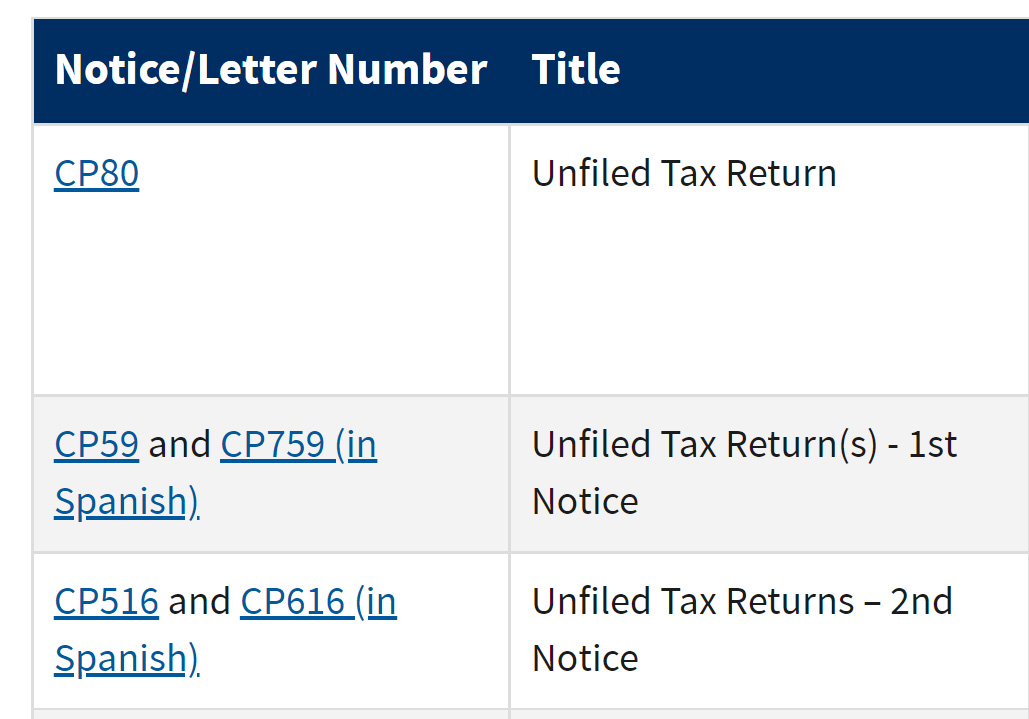
The IRS has just announced that it has stopped sending certain letters to taxpayers who owe money or haven’t filed tax returns in previous years.

However, this doesn’t mean you’re off the hook for paying the money you owe and this doesn’t mean you’re off the hook for filing tax returns from previous years.

In fact, the IRS is warning taxpayers that even though certain letters about taxes owed and tax returns that were not filed are not being sent out, interest and penalties may still be accruing.

So if you know you owe money, or if you know you have back tax returns that have not been filed, you should still get your situation fixed.

This is why you should call Legal Tax Defense for your free consultation. Call 800-231-3321.

Legal Tax Defense is happy to give you this free consultation. If your tax problems are not serious the experts at Legal Tax Defense will tell you how to fix your tax problems on your own.

In many cases, a tax debt of up to $10,000 can be handled by the taxpayers themselves.

When you make the free call to Legal Tax Defense they will listen to your situation. Yes, they’ll really listen. They want to understand your problem and issues. Many times the experts at Legal Tax Defense will tell you that you don’t need a professional service and you can resolve your issues on your own without paying for professional guidance. In fact, if you can resolve your issues on your own the experts at Legal Tax Defense will tell you how to do it.

As many of you know I’ve been a TV news reporter for many years. You’ve seen me on CBS, CNN, and CNBC. Over the years I’ve reported on the services of Legal Tax Defense and I know this is an organization where you will get the proper guidance and best services.

If you have tax issues don’t go another sleepless night. Make the free call. The IRS might have stopped sending out letters but the tax issues and the interest and penalties are not going away.

You need professional guidance. Call now to speak to a tax attorney for Free.

Disclaimer: Alan Mendelson is a well-known TV consumer news reporter who reports on tax issues. You should seek professional advice if you have tax questions or issues. 

-phone call button 1/11/2024-